MendCode is the anti-chatbot harness for the loop era
Welcome to MendCode: a local-first AI coding harness built around agents, loops, permissions, memory, packages, review, Usage Insights, and a terminal surface developers can actually own.
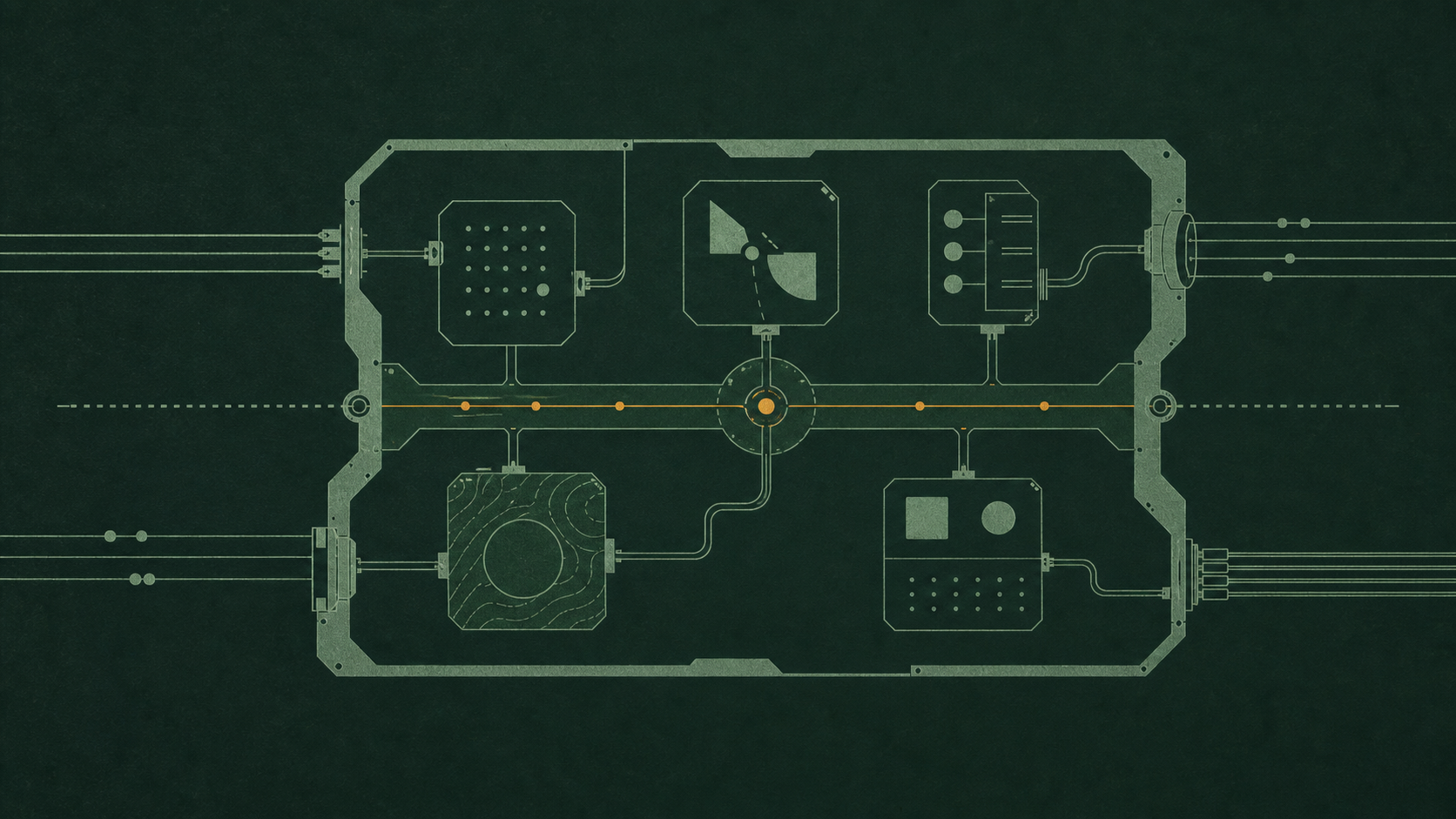
Editorial cover
A story-specific system diagram. Product evidence, when present, appears beside the claims it supports.
The boring version of this launch post would say MendCode is an AI coding assistant. That would be wrong. The assistant framing belongs to the chatbot era: ask a question, get an answer, paste the answer, hope the repo survives.
Serious AI coding moved past that. The work now lives in loops: inspect, edit, run, review, ask, delegate, wake up later, continue, stop at a gate. The model is not the product anymore. The harness around the model is the product.
The chatbot era ended
A chatbot is a text box. A coding agent is a system with tools, memory, permissions, background work, model roles, browser checks, package-aware workflows, and enough state to understand that a repo is not a prompt. The industry is still dragging chatbot assumptions into agent products, and it shows.
The useful question is no longer “which model can answer this?” It is “which harness lets me direct work without losing control of my environment?” That question gets sharper every month because the unit of AI work keeps moving: snippets became file edits, file edits became agents, agents are becoming loops.
The market fragmented
The AI coding market split into pieces: fast terminals, provider-specific shells, IDE copilots, cloud agents, automation scripts, and scattered dashboards. Each piece solves part of the job. None of them should force the developer to rebuild their operating system around a rented surface.
Developers do not want five disconnected control planes for the same repo. They want one place where sessions, tools, agents, loops, permissions, memory, packages, review, and local evidence can meet without hiding the repo behind product theater.
The split MendCode is collapsing
| Fragment | What it gets right | Where it breaks |
|---|---|---|
| Chat pane | Fast questions and answers | No durable workflow, weak review, too easy to paste and pray |
| Agent runtime | Can inspect, edit, run, and recover | Needs permissions, memory, package policy, and evidence to stay trustworthy |
| Workflow dashboard | Great visibility | Becomes another tab unless it lives where coding actually happens |
What a harness owns
A real harness owns the boring seams that demos skip. It decides how context enters the session, which model role handles which kind of work, when a shell command is safe enough to run, how a background loop wakes up, where memory gets proposed, and what the user can inspect after the agent says it is done.
That is why “just use the best model” is not an answer. The best model still needs a runtime that knows the repo, the tools, the permissions, the local files, the package conventions, and the review path. Without that, capability turns into a pile of impressive one-off actions.
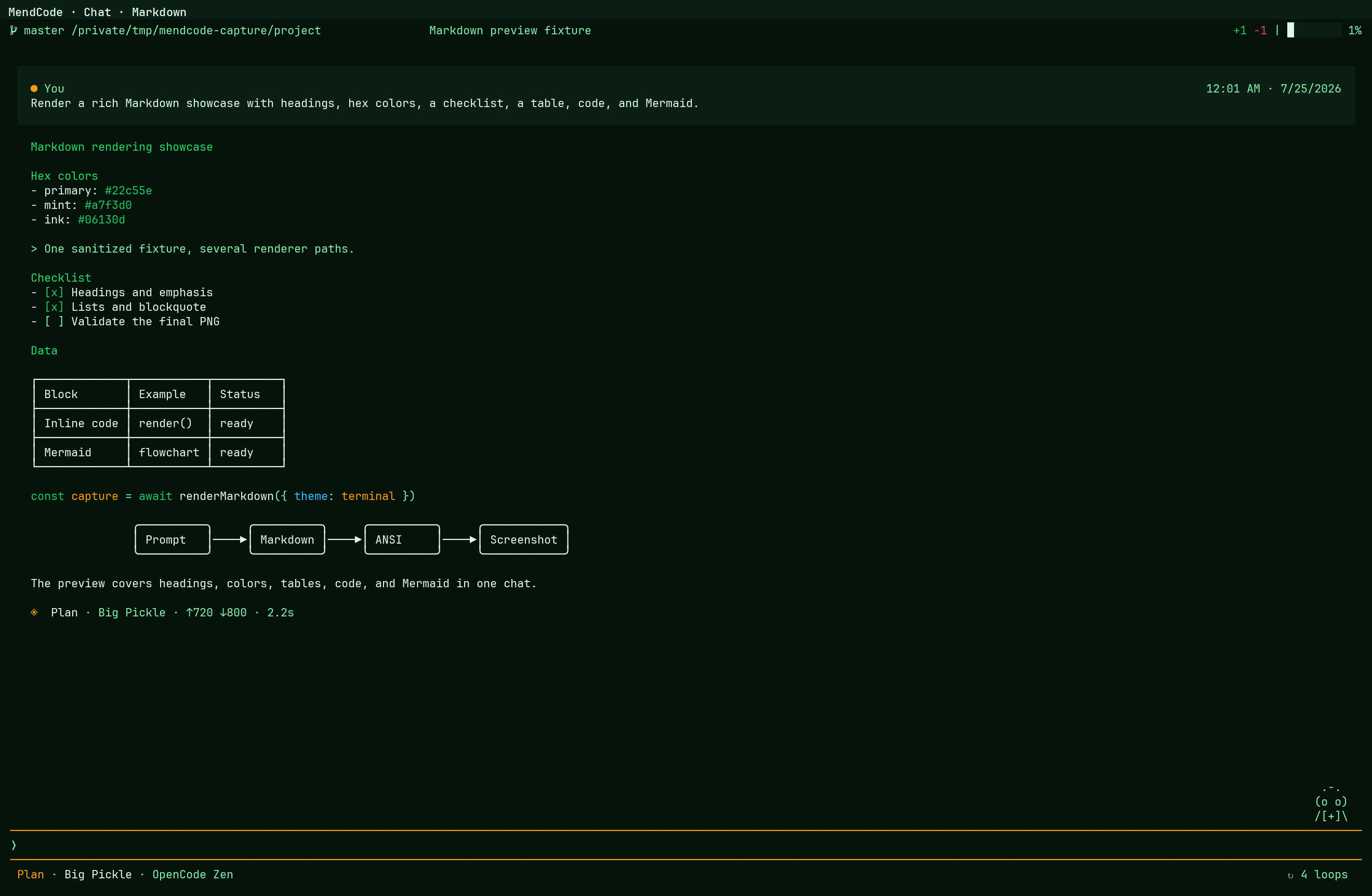
A harness has to own the seams
- Context: what enters the model window and what stays out.
- Tools: what can read, write, execute, browse, inspect, or delegate.
- State: which sessions, loops, memory proposals, and package overlays are active.
- Review: what evidence proves the task is actually done.
One harness, many strengths
MendCode is built around a simple belief: power should be available without turning every task into cockpit cosplay. The same local harness should be calm when you are editing, strict when risk appears, visible when review matters, and durable when work needs to continue later.
That is why MendCode treats profiles, packages, widgets, memory, permissions, Usage Insights, and agent roles as parts of one product surface. They are not decorative features. They are the difference between a model that can act and a developer environment you can trust.
The product surface
Agents
Delegate real work with tools, review expectations, and enough structure to avoid random one-off edits.
Loops
Turn repeated objectives into durable workflows with wakeups, stop conditions, and permission boundaries.
Memory
Keep continuity reviewable instead of letting invisible lore steer future sessions.
Packages
Share operating systems for work: skills, workflows, profiles, widgets, policy, and scripts.
Taste over bloat
The hard part is not adding every agent feature. The hard part is deciding when the user should see it. If every workflow, model, package, widget, loop, and permission surface is always visible, the product becomes a cockpit with every warning light turned on forever.
MendCode has to keep a strong opinion here: advanced power is available, but not always screaming for attention. A startup founder debugging a release does not need the same surface as someone authoring a reusable package. A security review should make risk louder. A writing session should make the terminal quieter.
Loops change the unit
A prompt asks for a response. A loop carries an objective. That distinction matters. In MendCode, a loop can be drafted, activated, paused, resumed, stopped, run once, bounded by max turns, tied to stop conditions, and guarded by report-only defaults. That is not chat. That is durable work with a control plane.
loop.activate({
  name: "nightly-docs-audit",
  objective: "Inspect docs drift and report stale install instructions.",
  triggerMode: "interval",
  maxTurns: 4,
  permissionMode: "report-only",
  stopWhen: ["no stale docs remain", "requires maintainer decision"]
})
Workflow diagram
Human sets direction and gates
Agent runs bounded work with tools
Review decides what becomes code, memory, or follow-up
Review is the new bottleneck
Once agents can produce more work than a human can manually write, the bottleneck moves to taste and review. Did the agent choose the right abstraction? Did it touch the correct files? Did it leave a secret in the diff? Did it test the actual failure mode or just run the easiest command?
That is why MendCode treats verification as part of the harness, not a polite suggestion at the end of a chat. The system should make it normal to ask what was read, what changed, what ran, what failed, and what still needs a human decision.
The job changes as agents get better
| Era | Human job | Harness requirement |
|---|---|---|
| Chatbot | Ask and paste | A decent answer box |
| Coding agent | Direct and inspect | Tools, permissions, diffs, tests |
| Loop era | Set goals and review outcomes | Durable state, gates, wakeups, memory, audit trail |
Sovereignty is the product
Developer sovereignty is not a slogan. It means the repo remains the ground truth. Permissions are visible. Memory is reviewable. Packages are inspectable. Widgets and pages can be changed. The workflow can be shared without turning into a closed platform ritual.
Closed silos are convenient until the shape of your work changes faster than the product team behind the silo can react. MendCode is designed for the opposite world: the user can keep changing the cockpit as the agent era changes underneath it.
How this stays sharp
The danger for MendCode is obvious: if every feature is always loud, it becomes the same bloated surface it is reacting against. The answer is not fewer capabilities. The answer is sharper product boundaries. Packages decide what workflow is loaded. Permissions decide what can happen. Memory decides what survives. Review decides what counts as done.
That structure is what lets the product keep absorbing new agent-era primitives without turning into sludge. Goals become loops. Skills become packages. Widgets become custom pages. Smart approval becomes part of the permission surface. The harness can grow because every primitive has a job instead of becoming another random button.
Modern does not mean overloaded. Modern means the surface can adapt without losing the plot.
What MendCode is
MendCode is the local-first AI coding harness for developers who want speed without giving up ownership, review, or control. It is not trying to make the terminal cute. It is trying to make the terminal worthy of agents that can actually do work.
In the loop era, the winning product is not the biggest chat box. It is the harness you can trust, inspect, reshape, and keep.